


Prof. Dr. Bela Gipp
Professor for Scientific Information Analytics &
Director of Research at the SUB (State and University Library Göttingen)

BIOGRAPHY
Prof. Bela Gipp (Dr.-Ing.) holds the chair for Scientific Information Analytics at the University of Göttingen, Germany, and is the Director of Research at the Göttingen State and University Library (SUB).
His research interests lie at the intersection of Information Science and Data Science. His group’s research focuses on developing and applying Natural Language Processing (NLP) techniques and methods for retrieving, analyzing, and visualizing information in large datasets. The implications of blockchain technology—for the benefit of both industry and society—is another research domain that Bela is passionate about.
Previously, Bela was a full professor at the University of Wuppertal, where he held the chair for Data & Knowledge Engineering from 2018 to 2022. Before that, Bela served as a junior professor at the University of Konstanz, where he led the Information Science Group from 2015 to 2018. He completed his Ph.D. in Computer Science (summa cum laude) at the University of Magdeburg in 2013. He conducted the majority of his doctoral research abroad while on a 4-year research scholarship at the University of California, Berkeley. While at UC Berkeley, he also made use of the proximity to the Silicon Valley to found the tech start-up SciPlore and co-found Docear. After his Ph.D., he received postdoctoral research fellowships at U.C. Berkeley and the National Institute of Informatics in Tokyo.
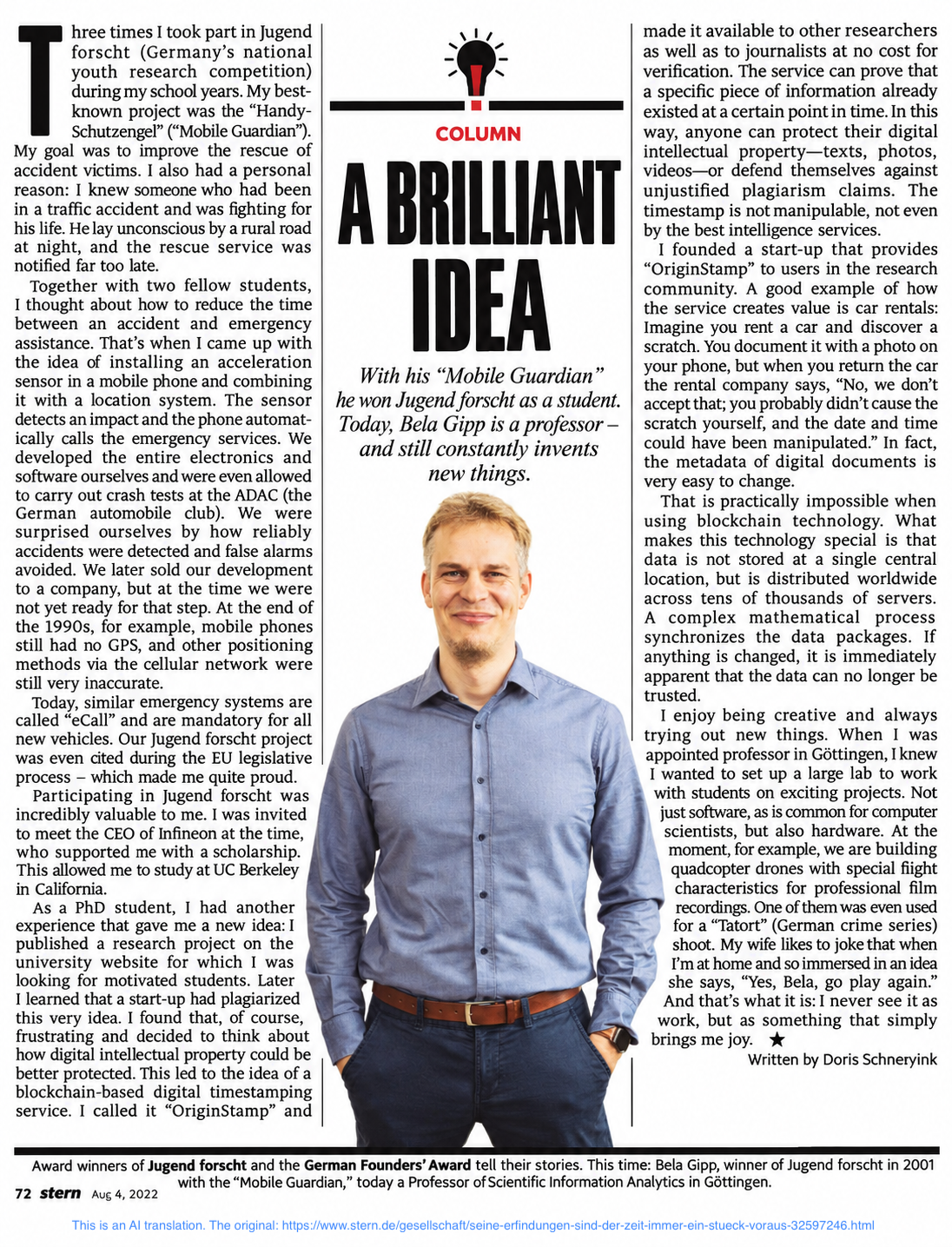
In his youth, Bela participated in Jugend Forscht, Germany’s premier youth science competition. After winning 1st place at the state-level competition three times, he was honored by the German Chancellor and Germany’s Federal President. Scholarships allowed him to study semesters abroad in Sydney, Beijing, Staffordshire, and at UC Berkeley. Today, he is involved as a jury member and mentor for Jugend Forscht and tech startups.
Bela has published over 200 peer-reviewed conference papers and journal articles, in addition to several books and patents, which have received more than 10,000 citations; his h-index is approximately 50. Currently, he is the PI of these DFG-funded projects. He has secured over 11 million EUR in third-party funding and venture capital investments for his research thus far. Additionally, he maintains active research collaborations with industry. For example, he founded OriginStamp AG, based in Switzerland.
Bela serves as a DFG-nominated member of the Digitality in Science Initiative of the Alliance of Science Organizations in Germany. He is a member of the scientific advisory board for the DAAD Program offering International Research Stays for Computer Scientists and the internationalization officer of the Institute for Computer Science. In his spare time, Bela enjoys photography, designing, building, and flying innovative drones, and he loves to paraglide in the Alps.
BIOGRAPHY IN STERN 

SHORT CV
Since April 2022
Full Professor (W3) for Scientific Information Analytics
University of Göttingen, Germany
and since June 2024:
Director of Research at the State and University Library Göttingen (SUB)
University of Göttingen, Germany
2018 – 2022
Full Professor (W3) for Data & Knowledge Engineering
Bergische University of Wuppertal, Germany
2018
2015 – 2018
Junior Professor (W1)
Head of the Information Science Group
University of Konstanz, Germany
2014 – 2015
Postdoc
National Institute of Informatics (NII), Tokyo, Japan
2013 – 2014
Postdoc
University of California (UC) Berkeley, USA
2009 – 2013
Research Fellowship
UC Berkeley, School of Information & Department of Statistics, USA
Ph.D. defense in 2013 at the University of Magdeburg, Germany
1999 & 2001 & 2002
Jugend Forscht
1st place at the state level of the German research contest “Jugend Forscht” in the years 1999, 2001, and 2002. Read more in this STERN article or here & here.
The GSM-Schutzengel and Its Influence on the Development of Europe’s Mandatory eCall System
The GSM-Schutzengel (GSM Guardian Angel) was an early automatic vehicle emergency notification system invented by Bela Gipp and developed together with Jöran Beel and Lars Petersen around 2000–2001.
The invention anticipated several fundamental capabilities of modern automatic crash notification systems, particularly the European eCall system, which became mandatory for newly approved passenger-car and light-commercial-vehicle types in the European Union on March 31, 2018.
GSM-Schutzengel demonstrated how automatic accident detection, mobile communication, and cellular-network-based localization could be combined to accelerate emergency response and potentially save lives.
Original project website:
https://gsm-schutzengel.de/
Article in the Braunschweiger Zeitung:
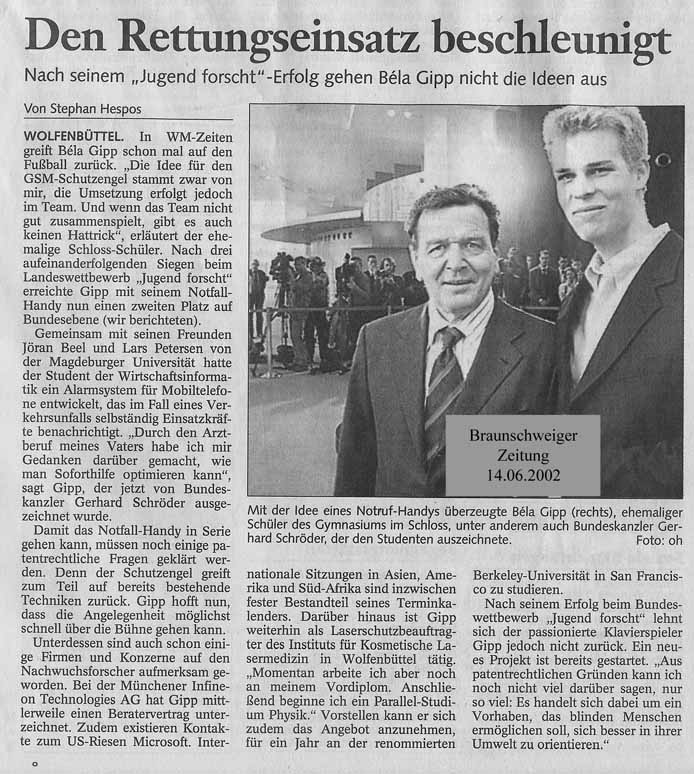
Bela Gipp honored by Chancellor Gerhard Schröder in 2002 after winning Jugend forscht
The Original Innovation: GSM-Schutzengel (2001)
At the beginning of the 2000s, mobile phones were becoming widespread, but automatically detecting vehicle accidents and notifying emergency services was not yet a standard feature.
The GSM-Schutzengel “Jugend forscht” project addressed a critical problem: after a serious accident, occupants may be unconscious, injured, or otherwise unable to contact emergency services. Such situations can cause potentially life-threatening delays in rescue operations.
The invention integrated several innovative technologies into a mobile-phone-based emergency notification system:
- Automatic crash detection: An acceleration sensor integrated into the mobile phone’s battery detected severe impacts.
- Automatic emergency notification: Upon detecting an accident, the system could automatically initiate an emergency alert without requiring action by the vehicle occupants.
- GSM-based localization: The system used cellular-network information to determine an approximate accident location without requiring a dedicated GPS receiver.
- Transmission of additional information: The system could communicate information about the occupants, including medical or other safety-relevant information.
- False-alarm prevention: A cancellation mechanism helped prevent unnecessary emergency notifications.
These capabilities anticipated the basic architecture of modern Automatic Crash Notification (ACN) and Advanced Automatic Crash Notification (AACN) technologies.
The project was presented at the German youth research competition Jugend forscht in 2001 and received second prize at the national competition in 2002.
Further information:
Original GSM-Schutzengel technical project description.
The Development of European eCall
The European Union subsequently developed eCall, a standardized vehicle emergency notification system based on the same fundamental concept: automatically detecting serious vehicle accidents, establishing an emergency communication connection, and transmitting location and vehicle information to emergency services.
The major milestones are:
2001: GSM-Schutzengel Demonstrated
Bela Gipp and his collaborators presented the GSM-Schutzengel system, combining automatic accident detection, GSM-based location identification, and mobile emergency communication.
2002–2003: European eSafety Initiatives
The European Commission advanced its eSafety initiative, focusing on intelligent vehicle safety technologies and interoperable emergency communication. By 2003, the development of a European-wide eCall system had become an important policy objective.
2004: Commercial Transfer of GSM-Schutzengel Technology
Following further development and successful testing, several intellectual-property rights and research results from the GSM-Schutzengel project were sold to a company in the United States in March 2004.
The original project website documents this development:
GSM-Schutzengel project history and milestones.
2015: European eCall Regulation
The European Union adopted Regulation (EU) 2015/758, establishing requirements for installing 112-based eCall systems in newly approved vehicle types.
2018: eCall Becomes Mandatory
From March 31, 2018, new types of passenger cars and light commercial vehicles covered by the regulation must include a compliant eCall system to obtain EU type approval.
Official legislation:
Regulation (EU) 2015/758.
Technical Similarities Between GSM-Schutzengel and eCall
Although the technologies differ in implementation and standardization, GSM-Schutzengel already demonstrated several functions that characterize modern eCall systems.
| Capability | GSM-Schutzengel (2001) | European eCall (2018) |
|---|---|---|
| Automatic accident detection | Accelerometer-based impact detection | Vehicle-integrated crash detection |
| Automatic emergency notification | Mobile-network-based notification | Automatic 112 emergency call |
| Accident localization | GSM cellular-network positioning | Primarily satellite-based positioning (GNSS) |
| Additional information | Occupant and medical information | Standardized minimum set of vehicle and incident data |
| Manual intervention | Mechanism for cancelling false alarms | Manual emergency-call activation and standardized handling |
| Implementation | Mobile-phone-based prototype | Standardized vehicle-integrated system |
The central technological concept is shared: a vehicle accident should automatically trigger an emergency notification containing sufficient information to help emergency responders locate and assist the victims, even when the occupants cannot call for help themselves.
Recognition in Academic Literature
The historical relationship between GSM-Schutzengel and European eCall has also been discussed in academic literature.
In the 2017 publication “NotrufPlus – ein standort- und internetbasiertes Notruf-Kommunikationssystem”, Manuel Eckert discusses the historical emergence of eCall and refers to GSM-Schutzengel as an early project from the 2001 Jugend forscht competition, followed by European eSafety developments.
This provides an independent academic reference recognizing GSM-Schutzengel in the historical context of automatic emergency notification.
Academic source:
Read the 2017 publication (PDF).
The Lasting Legacy of GSM-Schutzengel
GSM-Schutzengel was an early demonstration of a technological concept that is now an important element of modern automotive safety: detecting a serious accident automatically, identifying its location, and transmitting an emergency notification without depending on conscious intervention by the vehicle occupants.
Its significance lies in three aspects:
- Early technical innovation: The system demonstrated automatic accident detection and cellular emergency notification years before European eCall became mandatory.
- Practical feasibility: The invention showed how existing mobile-phone and GSM infrastructure could provide a potentially life-saving service.
- Historical influence and recognition: The project has been discussed in academic literature in connection with the emergence of eCall, and its intellectual-property rights and research results were subsequently transferred commercially to the United States.
The original system and the modern eCall infrastructure are technically distinct, but they address the same fundamental objective: reducing the time between a serious accident and the arrival of emergency assistance.
GSM-Schutzengel can consequently be described as an early technical precursor of today’s automatic vehicle emergency-call systems, including Europe’s mandatory eCall technology.
Historical References and Further Reading
- Original GSM-Schutzengel website:
https://gsm-schutzengel.de/ - Original technical project description:
GSM-Schutzengel technical documentation - Project timeline and commercialization:
GSM-Schutzengel project milestones - Official Jugend forscht project archive:
Der GSM-Schutzengel - Academic publication (2017):
NotrufPlus – ein standort- und internetbasiertes Notruf-Kommunikationssystem - European eCall legislation:
Regulation (EU) 2015/758
Conclusion
Invented by Bela Gipp and developed with Jöran Beel and Lars Petersen, GSM-Schutzengel was an early contribution to the technological evolution of automatic vehicle emergency notification.
Its central principles anticipated essential functionality of European eCall, which became mandatory for newly approved vehicle types in 2018.
Learn more about the original invention:
GSM-Schutzengel – Official Project Website.
CURRENT THIRD-PARTY PROJECTS
| Project Title | Begin – End | PI & (PM) at GippLab |
Funding Source |
|---|---|---|---|
| Digitalization Professorship Scientific Information Analytics |
04/22 – 12/28 | Gipp (Meuschke) |
MWK |
| Development of an Innovative AI-based Recommender System in the Chemical Process Industry Based on an Innovative Domain-Adaptive Multilingual Language Model (SPELL) |
01/24 – 02/27 | Gipp (Kirstein) |
BMWE |
| Fake News Detection in Video and Text | 04/25 – 12/26 | Gipp (Wahle, Ruas) |
KIPOT |
| Development of a novel, user-centered, multimodal multi-agent assistance system for first-time plannable, descriptive, and reproducible workflows aimed at process optimization and the development of continuous improvement measures in the process industry. |
08/25 – 11/27 | Gipp (Wahle) |
BMWE |
| Researching with Derivatives: Solutions for Providing Rights-Protected Materials Online |
12/25 – 11/27 | Gipp (Kurzawe) |
DFG |
| AI in Museums | 12/25 – 11/27 | Gipp (Wahle, Ruas) |
MWK |
| LibraryAI — Explorative Development and Testing of a Virtual Library Research Assistant Application |
12/25 – 11/28 | Gipp (Meuschke, Wahle, Ruas) |
DFG |
| Library Automation through AI Technologies | 08/25 – 08/28 | Gipp (Kurzawe) |
MWK |
| Edition, Artificial Intelligence, and Lexicography Interdisciplinary Approaches and Digital Methods for Working with Early New High German Texts |
12/25 – 11/29 | Gipp (Wahle, Ruas) |
MWK |
| Digital Geochemical Data Infrastructure (DIGIS) for GEOROC 2.0 |
01/26 – 12/28 | Gipp (Kurzawe) |
DFG |
| Establishment of a network and services for research information |
01/26 – 12/28 | Gipp (Dogan) |
MWK |
| Opening, Profiling, and Expansion of the Bibliometrics Competence Network, Subproject: Open Research Information Stewardship and Competence Pooling | 01/26 – 12/28 | Gipp (Jahn) |
BMFTR |
| Paraphrase Types: A New Paradigm for Paraphrase Generation and Detection |
03/26 – 02/29 | Ruas (Wahle) |
DFG |
| TextLPG – Exploratory Research of Text as a Labeled Property Graph |
04/26 – 03/29 | Gipp (Dogan) |
DFG |
| The Bias Analysis Research Infrastructure (BARI) | 05/26 – 04/29 | Gipp (Spinde) |
DFG |
| Digital Media Workflow II: Cooperative Data Infrastructures for AI and TDM |
07/26 – 06/29 |
Gipp (Dogan) |
DFG |
| Cultural Heritage for Artificial Intelligence (CHAI) | 01/27 – 12/28 | Gipp (Kurzawe) |
DFG |
| Research Oriented Sustainable Software (ROSS) | 03/27 – 02/30 | Gipp (Dogan) |
MWK |
NEWS
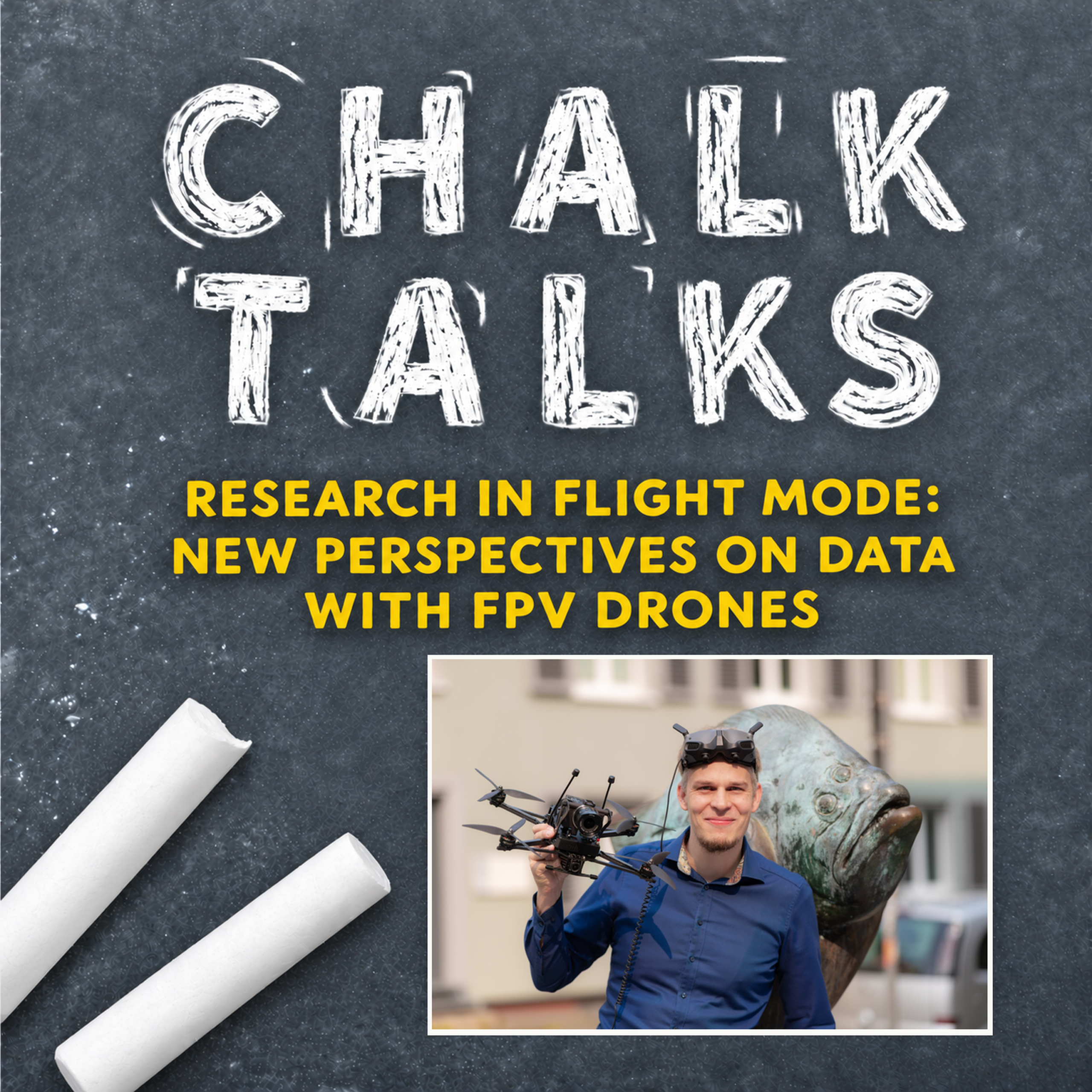
Research Takes Flight: Chalk Talk by Bela Gipp at Forum Wissen on November 27
How can first-person view (FPV) drones offer new perspectives on scientific data? Bela Gipp will explore this question in his Chalk Talk, “Research in Flight Mode: New Perspectives on Data with FPV Drones.” The Chalk Talks series invites researchers from [...]
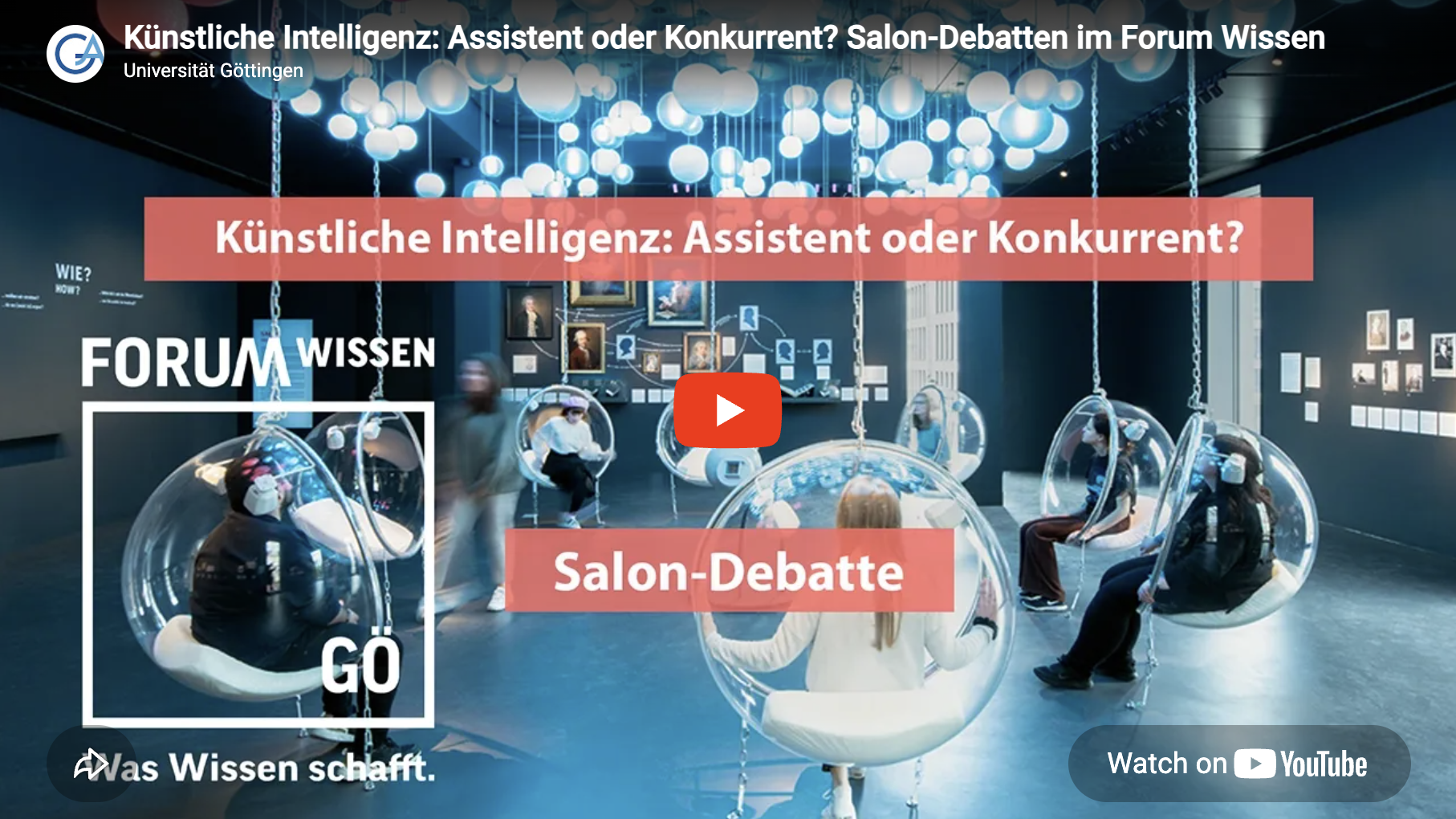
Video Recording: “Artificial Intelligence – Assistant or Competitor?”
The rapid development of artificial intelligence raises a fundamental question: are we witnessing the emergence of the ultimate tool or the devaluation of human uniqueness? As AI increasingly enters studios and offices, the boundaries between human inspiration and machine [...]

Upcoming Talk on April 30: Creating Data and Tools for Open Cultural Analysis Activities: TORCHLITE and Beyond
How can researchers explore millions of digitized texts when much of the data remains under copyright? In this upcoming talk, Prof. J. Stephen Downie (University of Illinois Urbana-Champaign) will present new approaches to open cultural analytics through the HathiTrust Research [...]

DFG Funds Project on Paraphrase Types and Plagiarism Detection
In an age where AI can generate and manipulate text that is often indistinguishable from human writing, which characteristics can help us identify human and machine text more accurately? This is a central question at the heart of a new [...]
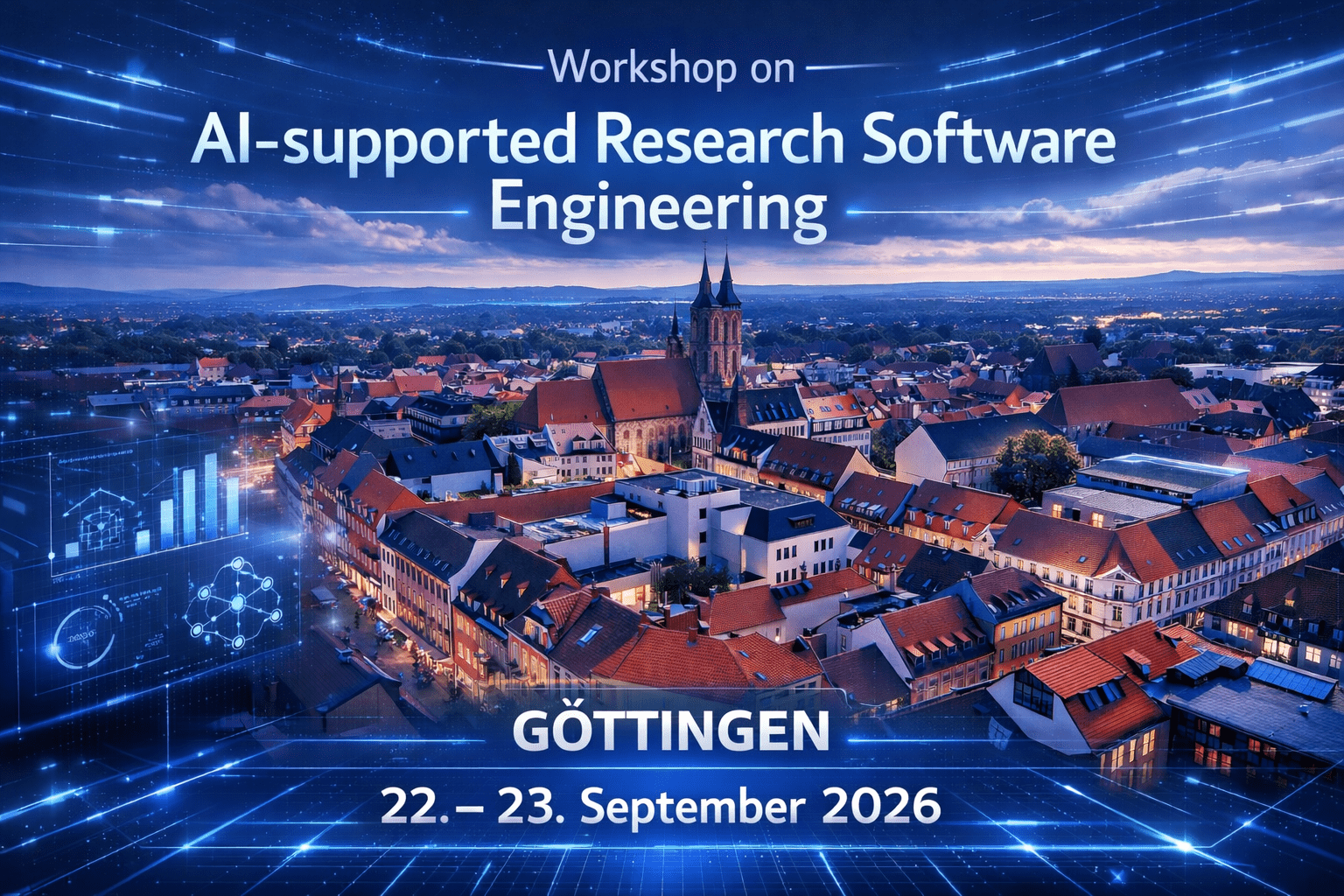
Workshop on AI-Supported Research Software Engineering
We are excited to announce the Workshop on AI-Supported Research Software Engineering, an interactive event for research software engineers and scientists engaged in developing and maintaining research software in the era of AI. When: Tuesday, 22 September 2026 - Wednesday, [...]
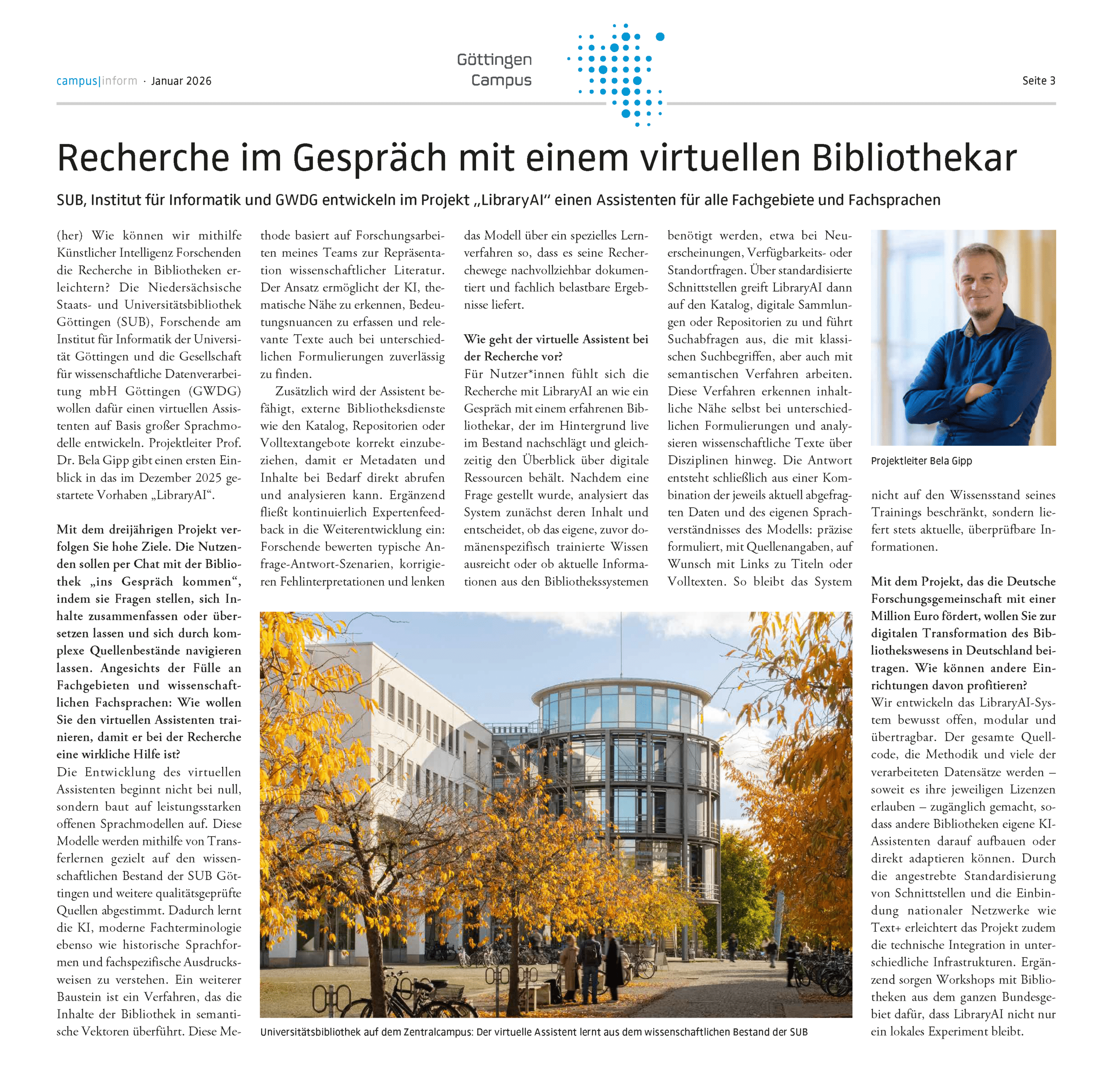
Virtual Research Librarian: campus | inform reports on the LibraryAI project
The current issue of campus | inform features LibraryAI, a joint research project of our group, the State and University Library Göttingen (SUB), and the GWDG. We aim to develop an AI-powered virtual librarian that supports researchers across disciplines by [...]
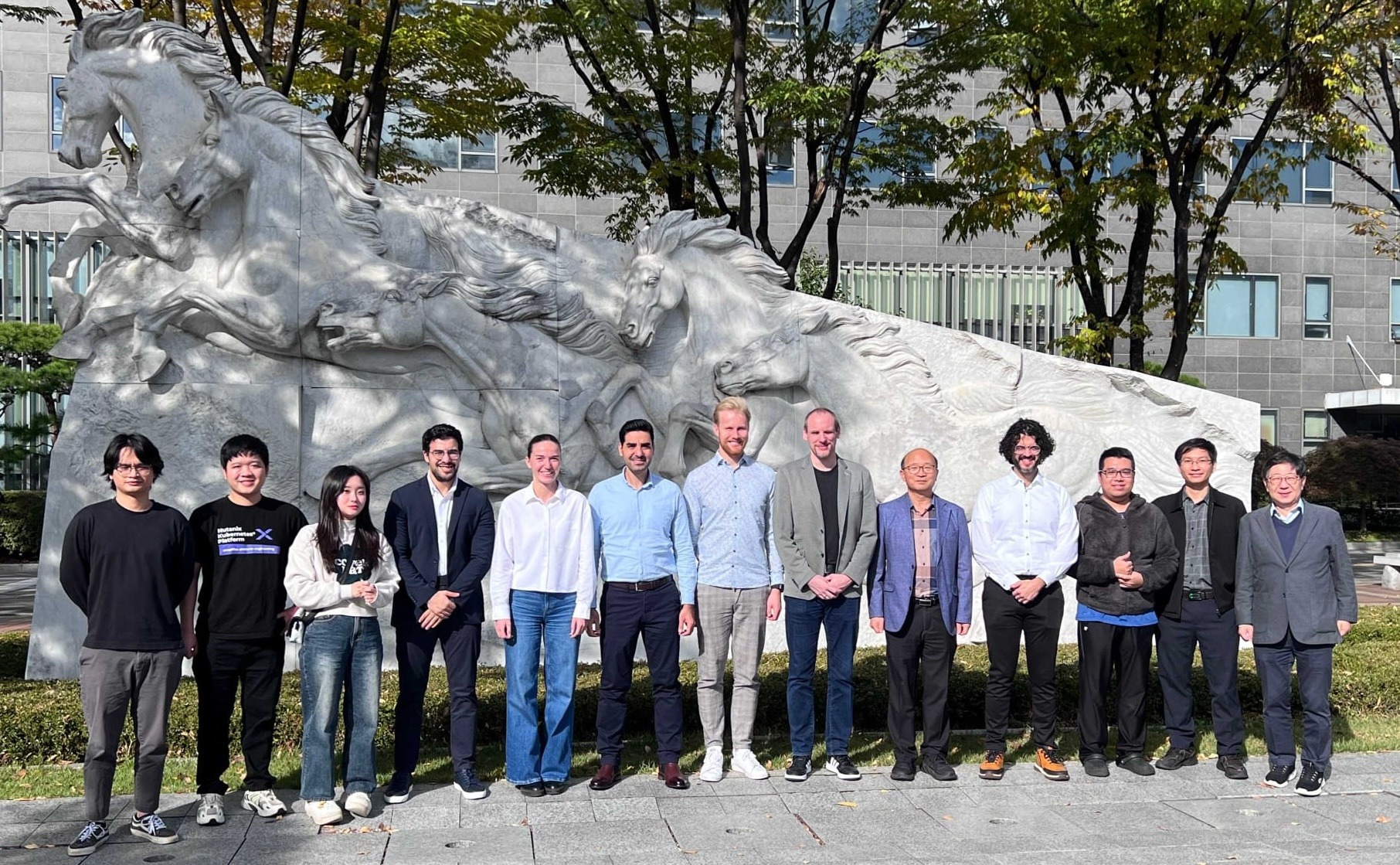
GippLab Joins International Research Project to Detect Fake News
How can AI help reliably identify falsified and manipulated digital content such as deepfakes, synthetic voices, and multimodal misinformation? This question is at the center of the Korean National Police Academy’s fake news project, a joint initiative involving the State Criminal Police Office, University [...]
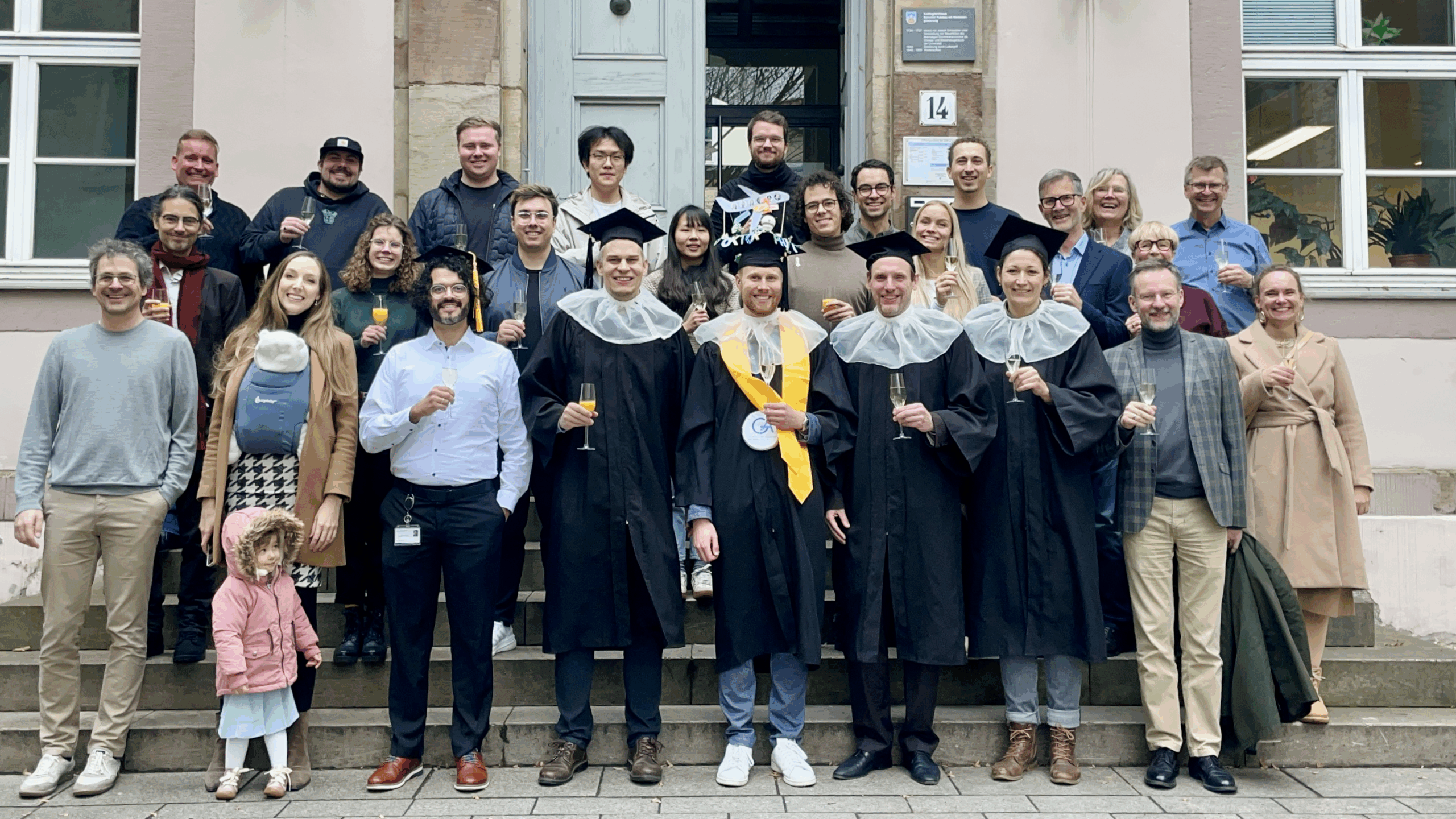
Congratulations to Jan Philip Wahle on his successful PhD thesis defense
We are thrilled to announce that Jan Philip Wahle has successfully defended his PhD thesis titled Language Modeling and Understanding Through Paraphrase Generation and Detection. In the presence of his family, friends, and colleagues, Jan Philip delivered an outstanding presentation [...]

GippLab Presents Five Papers at EMNLP Conference in China
Our team, together with collaborators from Mercedes-Benz, eschbach, the North Rhine-Westphalia State Criminal Police Office, and JUST ADD AI, presents the following five papers at the EMNLP conference 2025—one of the flagship conferences in NLP (CORE rank A*)—taking place in [...]
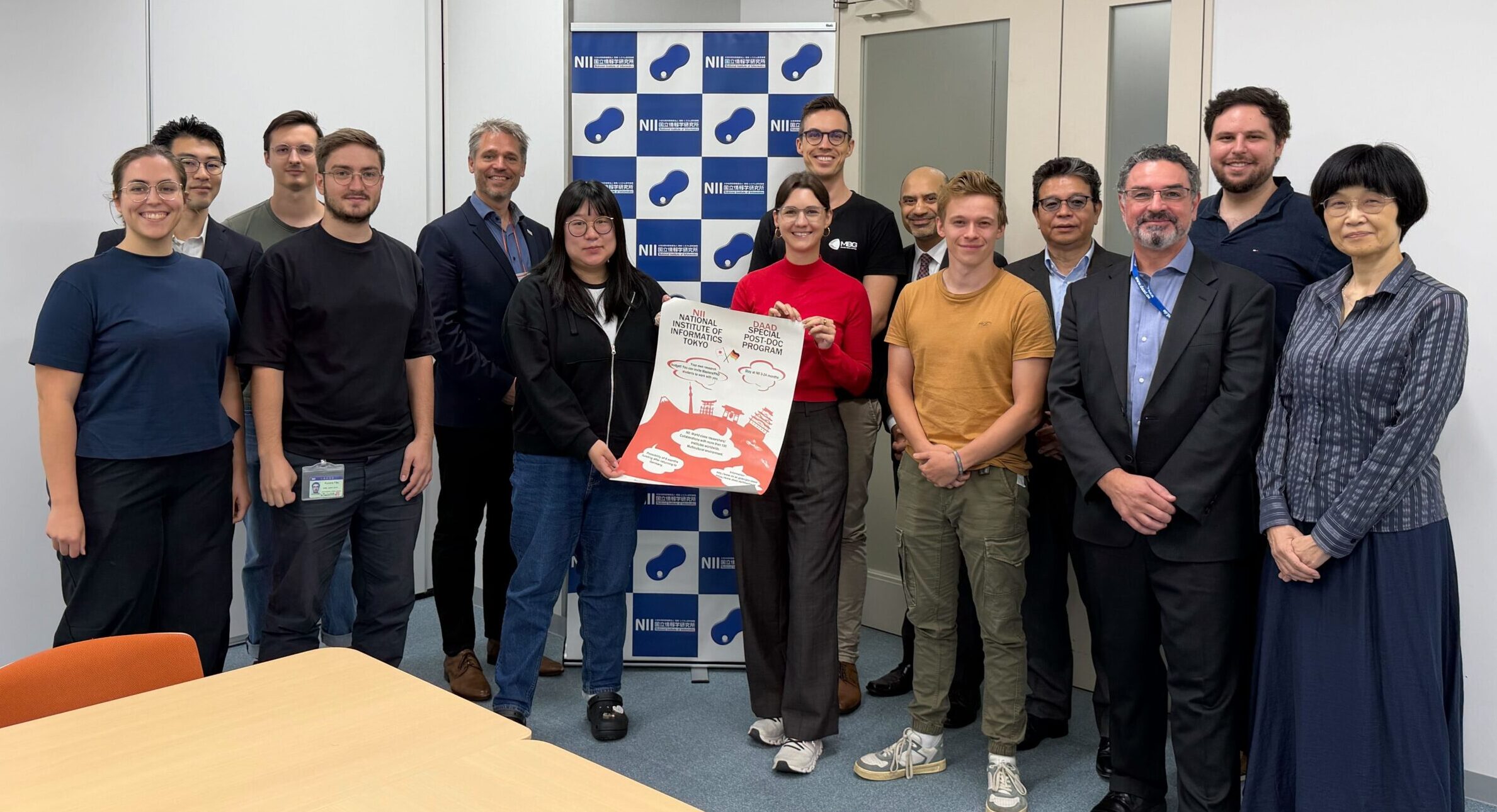


GippLab Showcases Research to DAAD President at NII Tokyo
GippLab members Dr. André Greiner-Petter and Dr. Timo Spinde had the honor of meeting Prof. Joybrato Mukherjee, President of the German Academic Exchange Service (DAAD), during his visit to the National Institute of Informatics (NII) in Tokyo. During the meeting, [...]

Lower Saxony Funds Project on AI in Museums with €2.25 Million
How can artificial intelligence (AI) support museums in digitally unlocking their collections? This question is being addressed by the joint project “AI in Museums”, in which our lab is involved. The Lower Saxony Ministry of Science and Culture (MWK) is [...]

Lower Saxony Ministry of Science and Culture Funds Göttingen Project “EDIKILEX” with €4.5 Million
How can the literary treasures found in texts from the Early New High German period (ca. 1350–1650) be made available and useful for future research in all their breadth and depth? The interdisciplinary joint project EDIKILEX – Edition, Artificial Intelligence, [...]
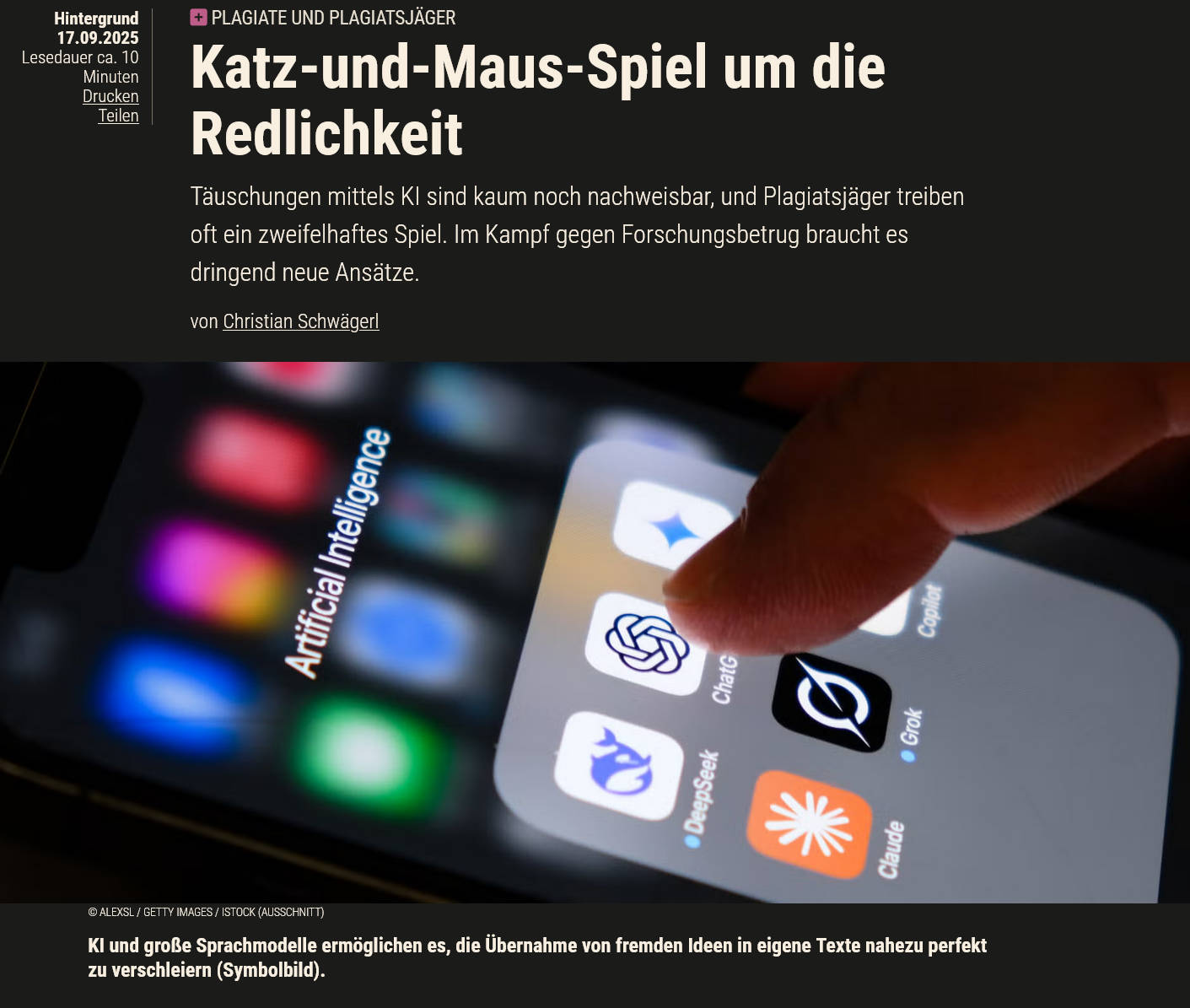
Spektrum der Wissenschaft Highlights Our Research on the Future of Plagiarism Detection
How can science uphold integrity in an era where large language models (LLMs) can seamlessly disguise stolen ideas? The renowned journal Spektrum der Wissenschaft explores this question in its recent article “Das Katz-und-Maus-Spiel um die Redlichkeit” (“Cat-and-Mouse Game with [...]

Research‑Internship Opportunities at the National Institute of Informatics (NII) in Tokyo
The National Institute of Informatics (NII) in Tokyo is Japan’s premier computer‑science research institute across different research areas. Through a Memorandum of Understanding (MOU) with the University of Göttingen, master’s students and PhD candidates can conduct paid research internships or [...]
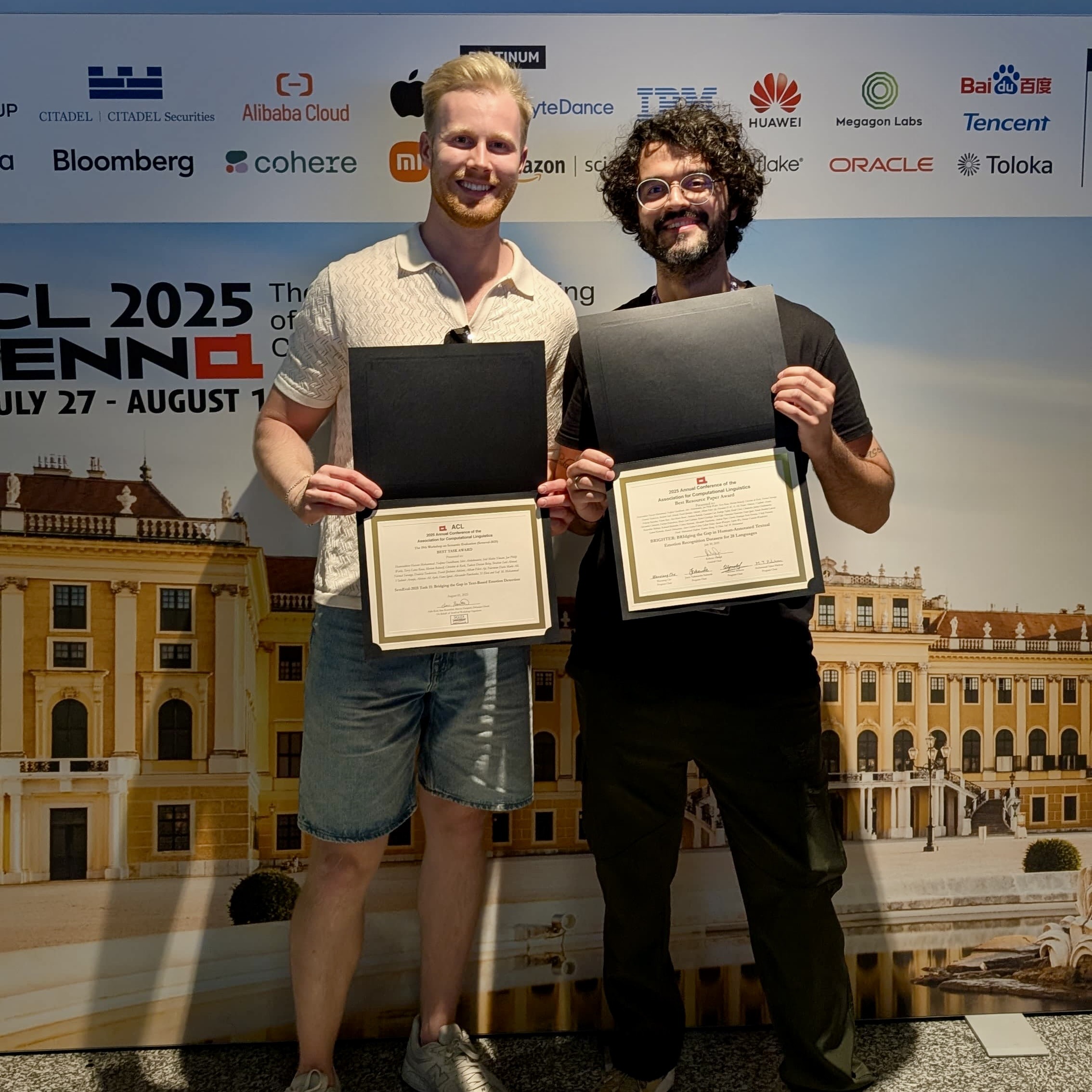
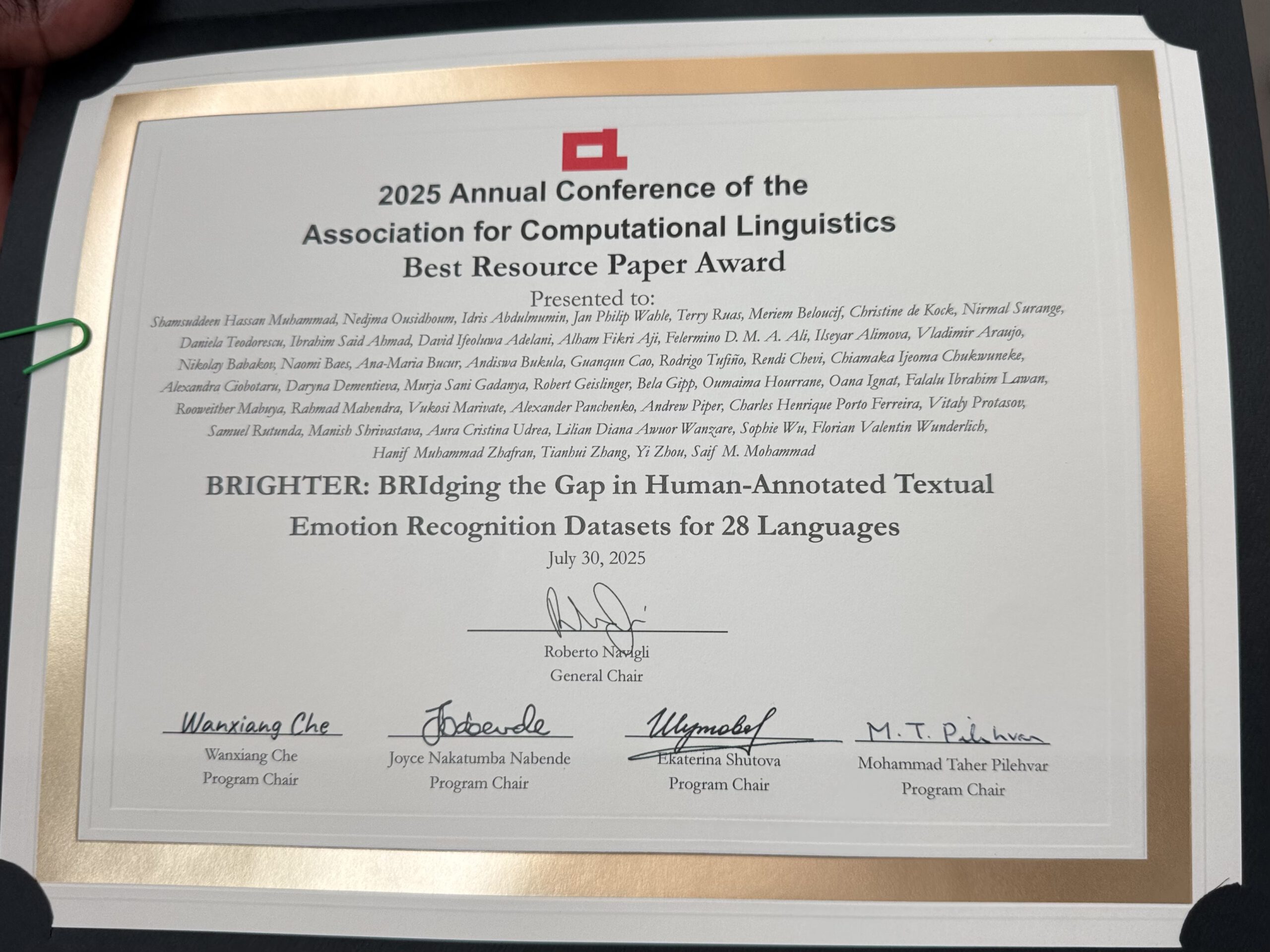
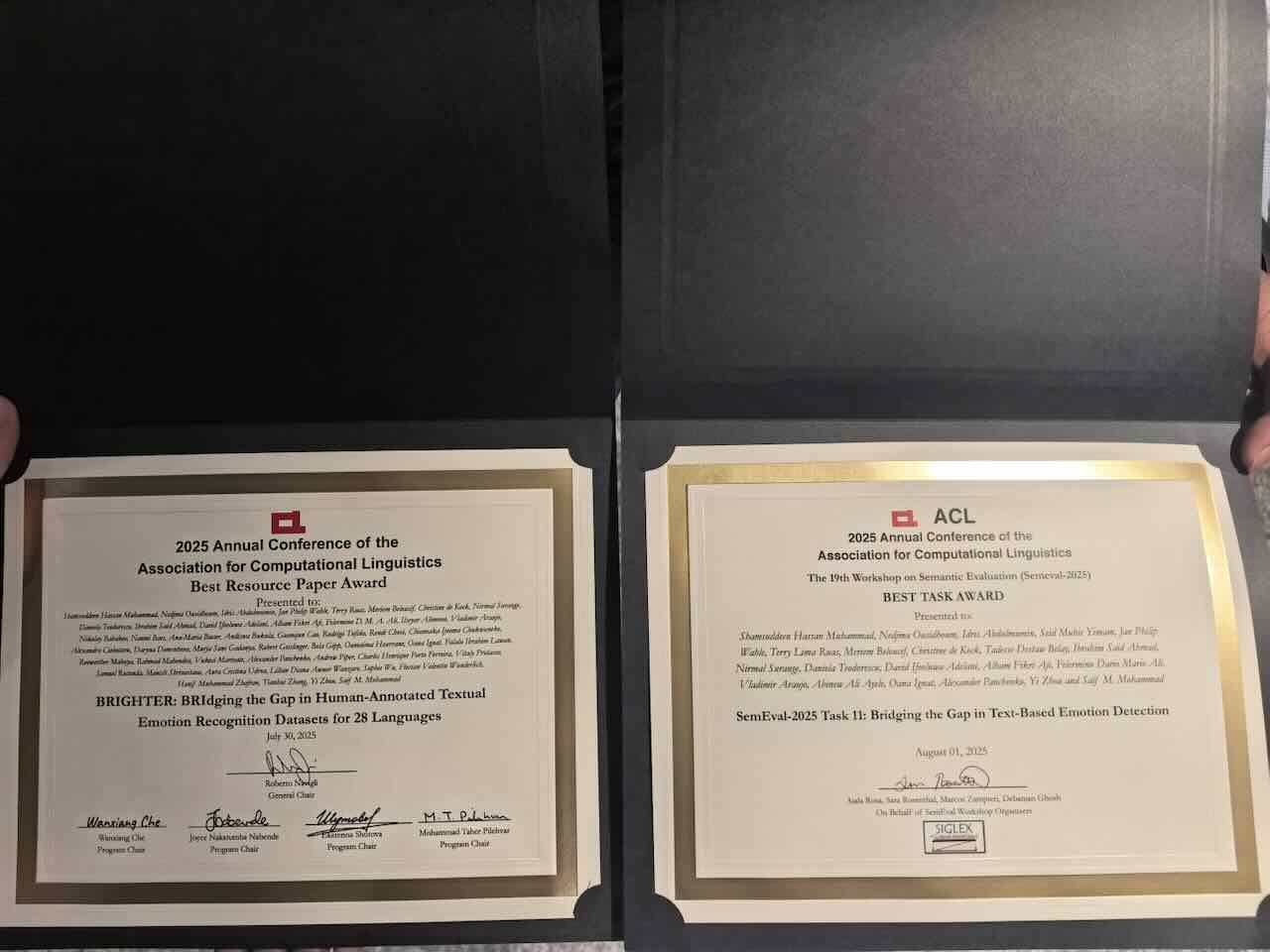
GippLab wins ACL Best Paper Awards
We're excited to share that our work on multilingual resources has won two major awards at ACL 2025: Best Resource Paper and Best SemEval Task! This project was the most popular task ever hosted on Codabench, with over 700 participants, [...]
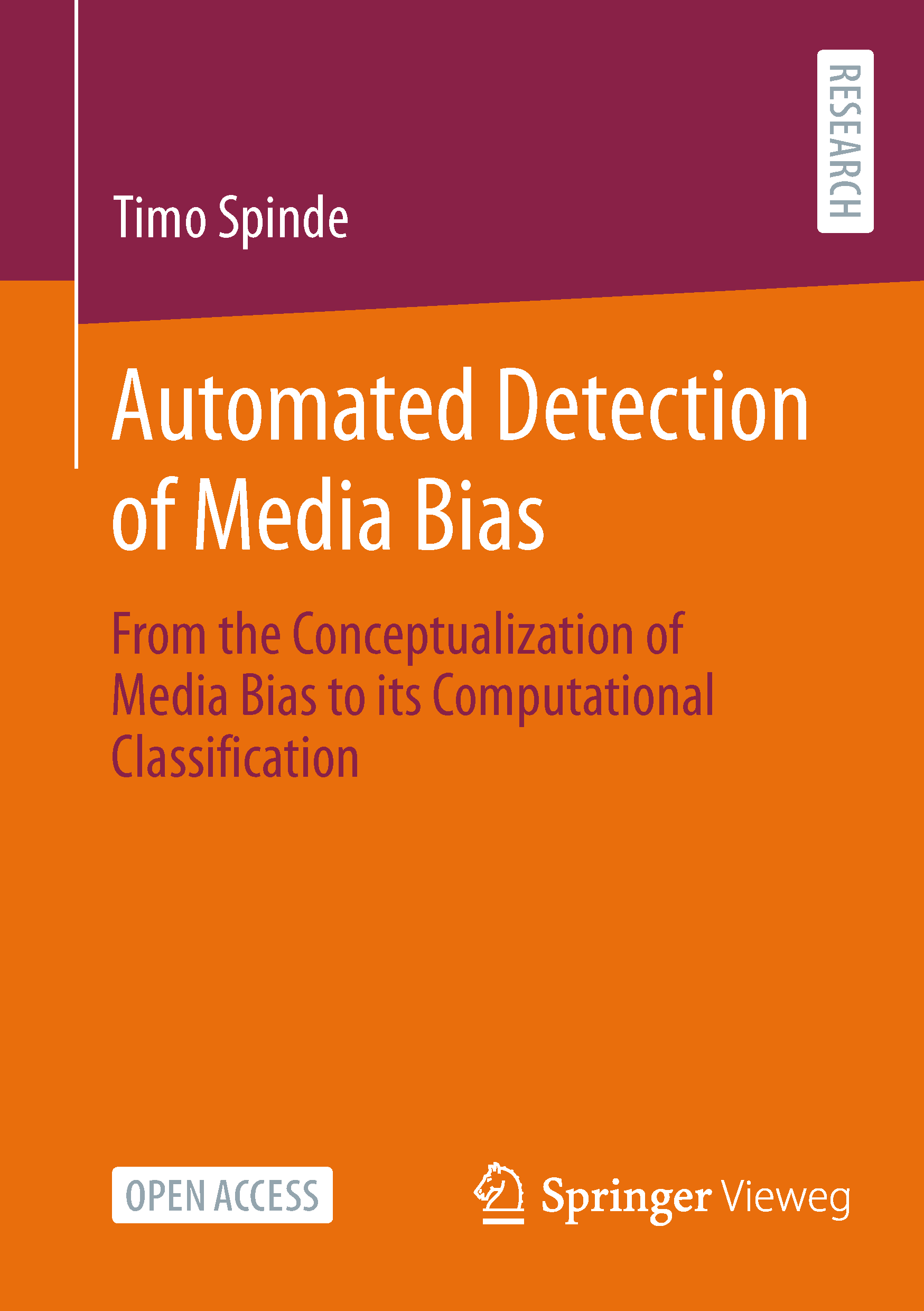
New Open-Access Book on Media Bias
We're excited to announce that the book Automated Detection of Media Bias: From the Conceptualization of Media Bias to its Computational Classification, by our team member Dr. Timo Spinde, is now available for free from Springer. The book summarizes the results [...]
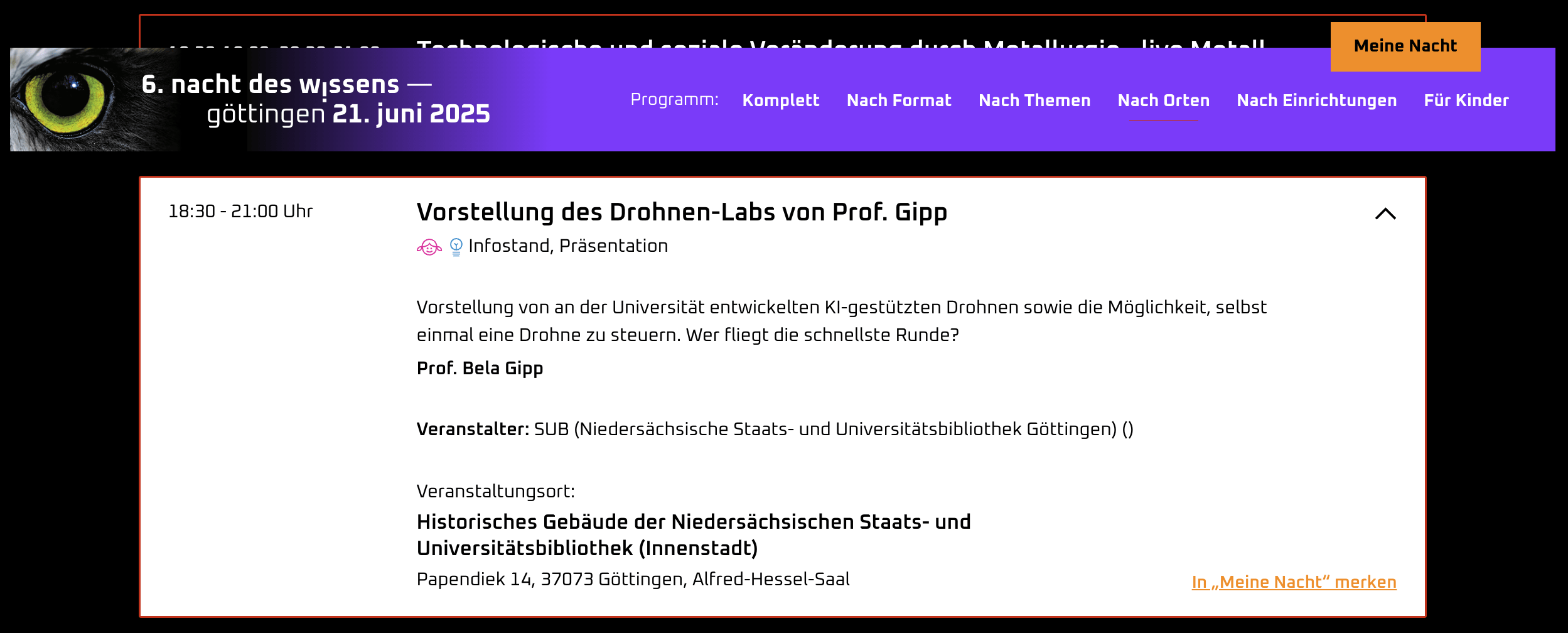
Nacht des Wissens
Visit us at the Nacht des Wissens! For more information, please visit: https://www.goettinger-nacht-des-wissens.de/nach-orten/innenstadt/ See also this video (minute 1:12): https://youtu.be/RnyqkddjSUw?si=nzm54D4riOAtMls2&t=71
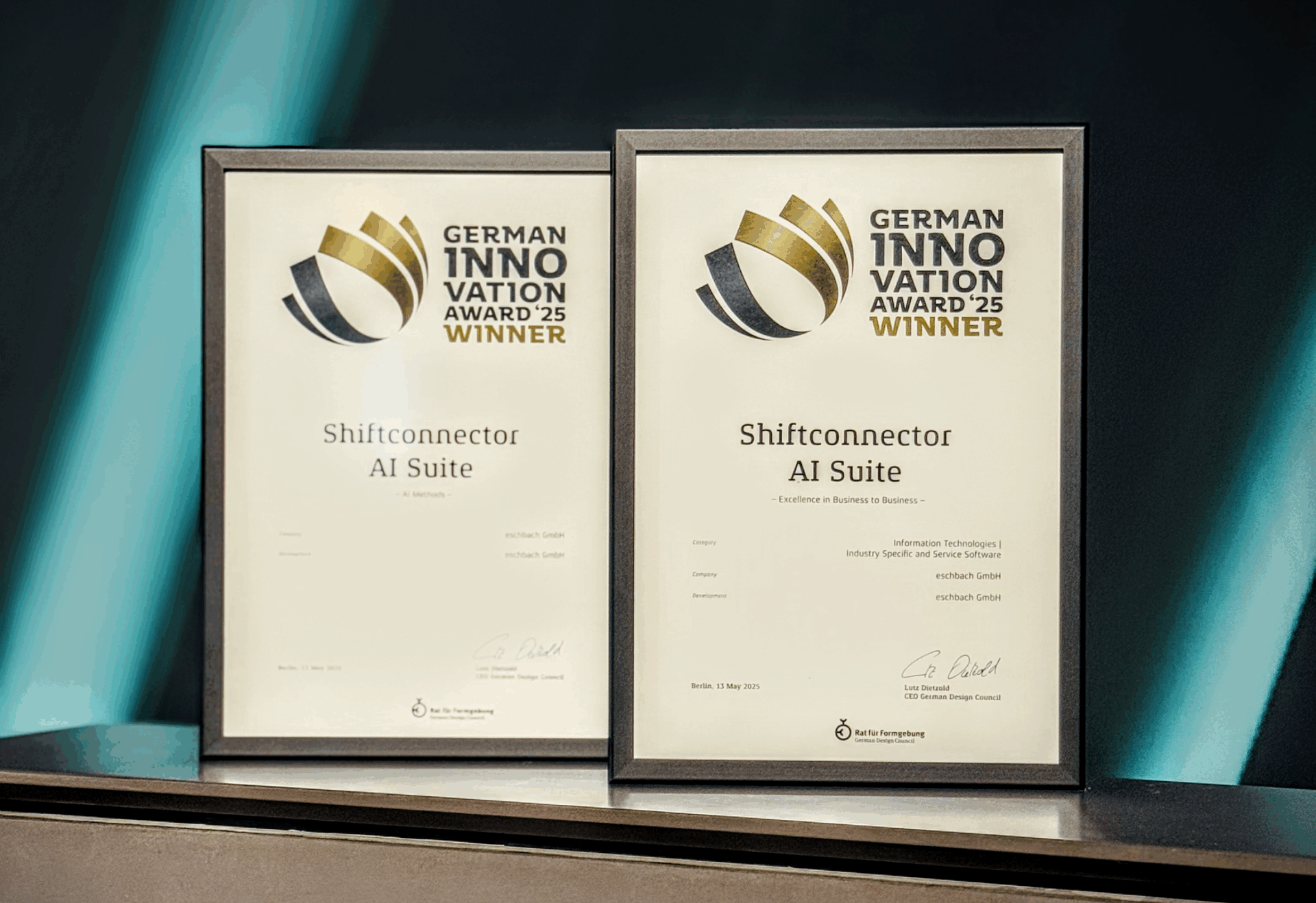
Collaborative AI project with our industry partner eschbach wins twice in the German Innovation Award 2025
Shiftconnector AI Suit, which is developed as a collaborative project between eschbach and GippLab, wins the German Innovation Award 2025 in two categories, standing out of 460 submissions: AI Methods Information Technologies | Industry Specific and Service Software SAMI (Shiftconnector [...]

DFG Funds Development of a Virtual Assistant to Facilitate Research in Libraries
How can we use Artificial Intelligence (AI) to fundamentally simplify researchers' access to scientific information? Our research group, the Lower Saxony State and University Library Göttingen (SUB), and the Gesellschaft für wissenschaftliche Datenverarbeitung mbH Göttingen (GWDG) aim to develop a [...]
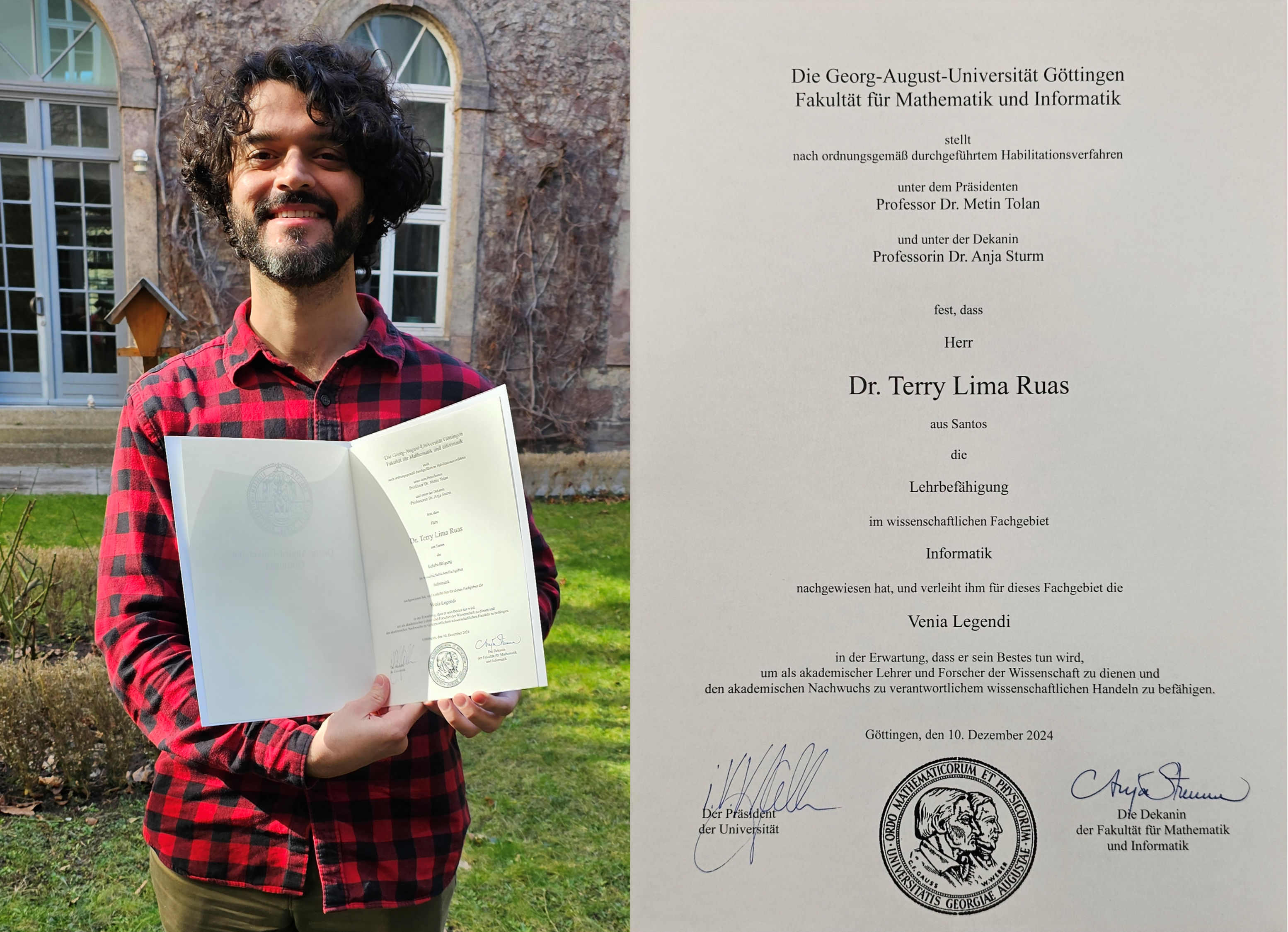
Dr. Terry Ruas passes habilitation exam
We are excited to announce that our group member, Dr. Terry Ruas, has successfully passed his habilitation exam by demonstrating excellence in research and teaching. This great achievement has rightfully earned him the venia legendi (permission to lecture) in computer [...]
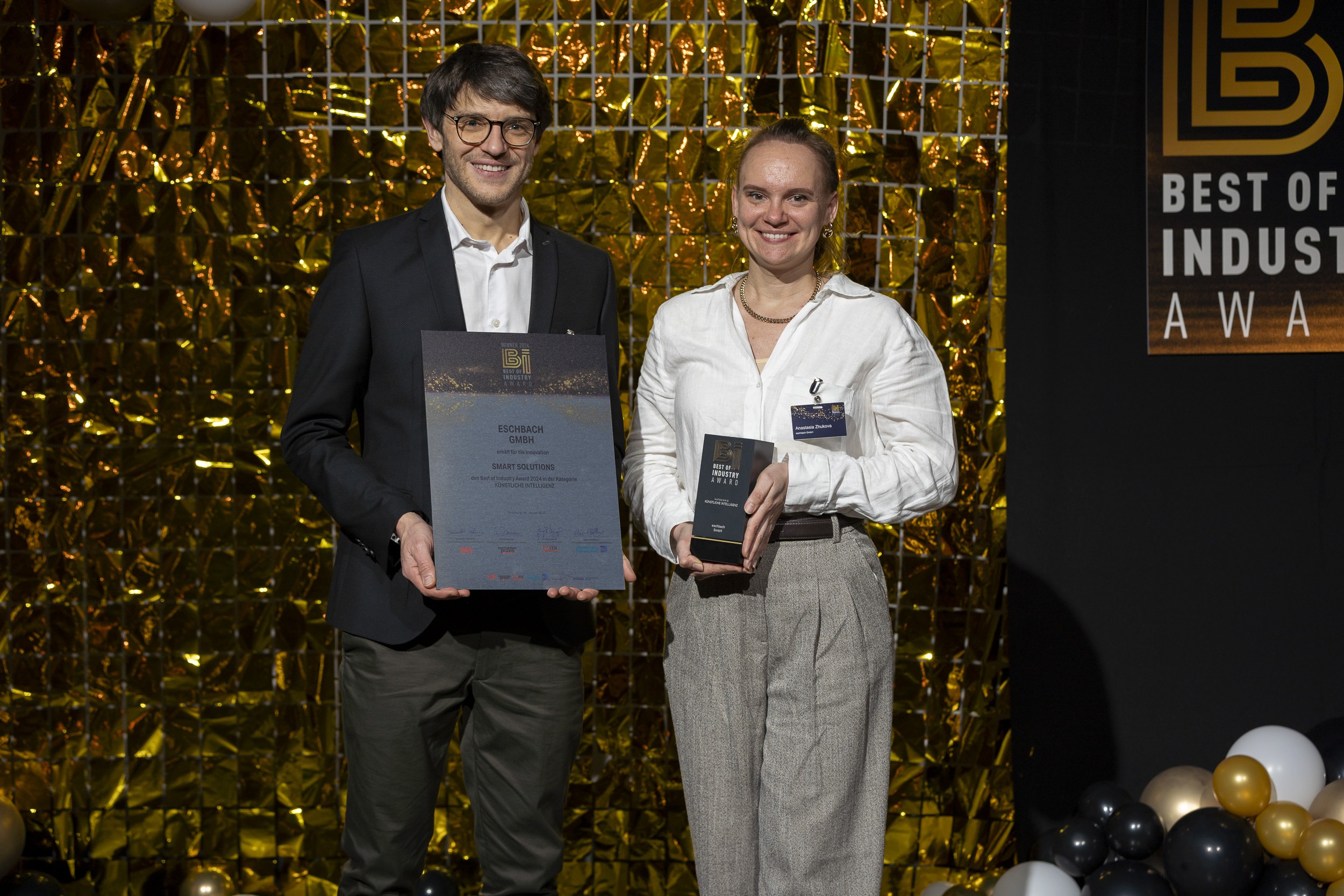
“Smart Solutions” wins Best of Industry Award 2024
We are excited to announce that a result of our longstanding research collaboration with eschbach GmbH has been awarded the Best of Industry Award in the category of Artificial Intelligence for the second time in a row. The award recognizes [...]
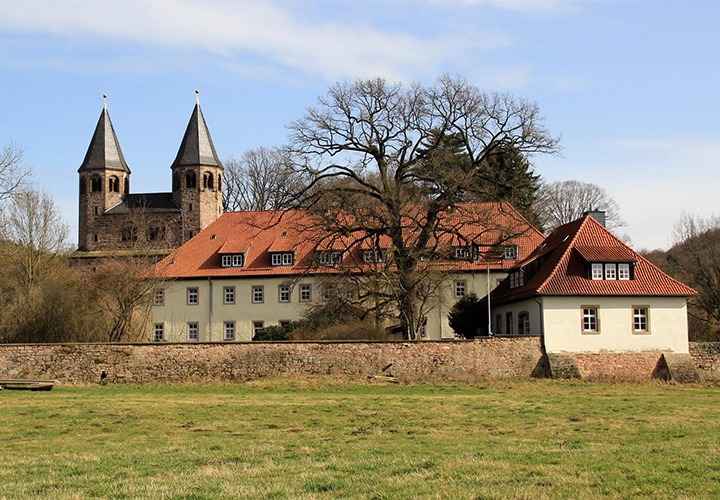
Talk on the Ethical Challenges of AI in Bursfelde
On Oct. 23 2024, Bela Gipp will take part in the “Bursfelde Talks” series at the Bursfelde Monastery. The panelists will discuss the theological and ethical challenges of artificial intelligence. Will AI replace us? Will AI fundamentally improve and make [...]
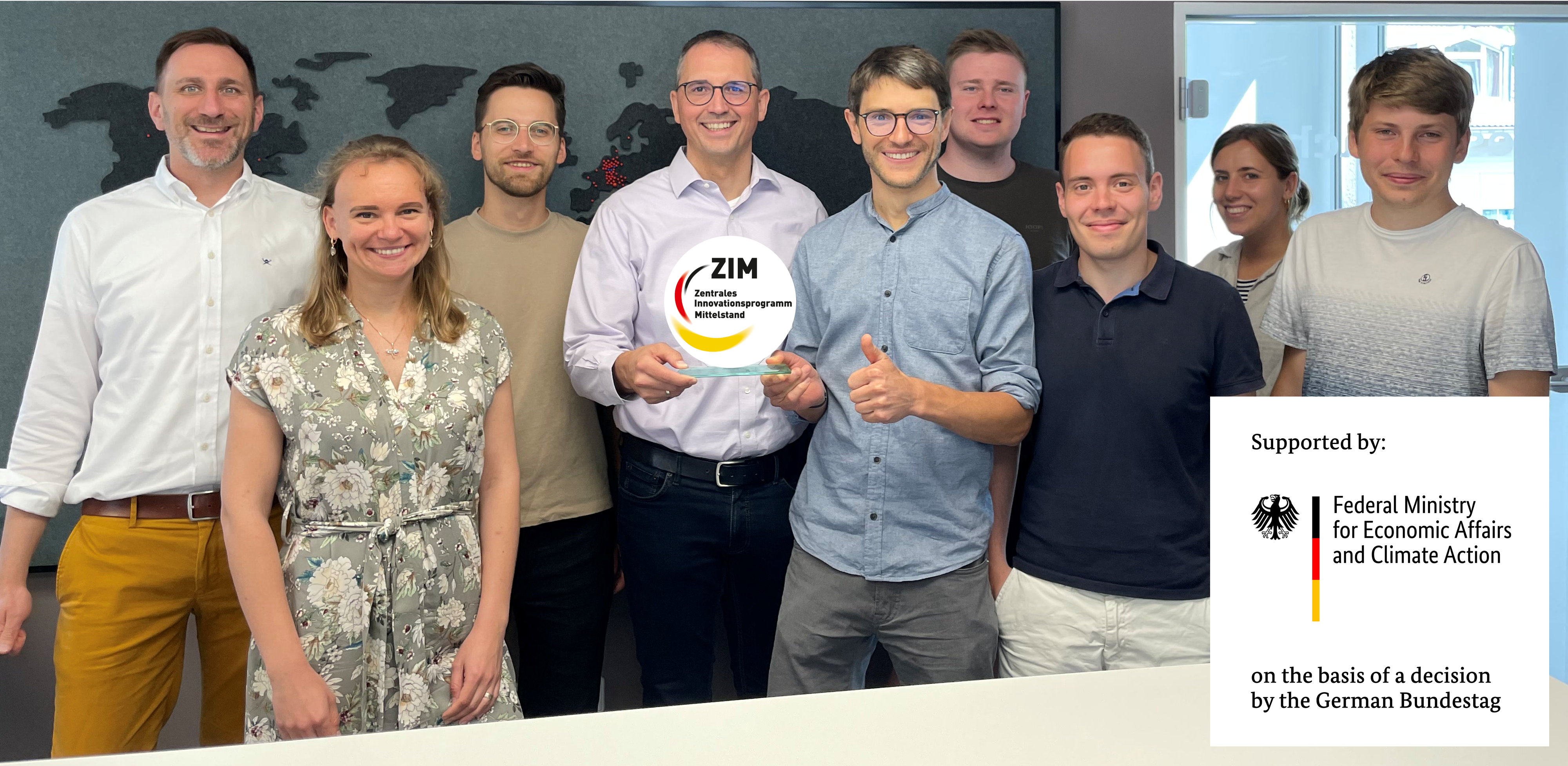
Federal Funding Approved for AI Research Collaboration with eschbach
We are thrilled to announce that the Federal Ministry for Economic Affairs and Climate Action has approved funding for a 30-month collaborative research project with our longstanding industry partner, eschbach, under the Central Innovation Program for Small and Medium-sized Enterprises [...]
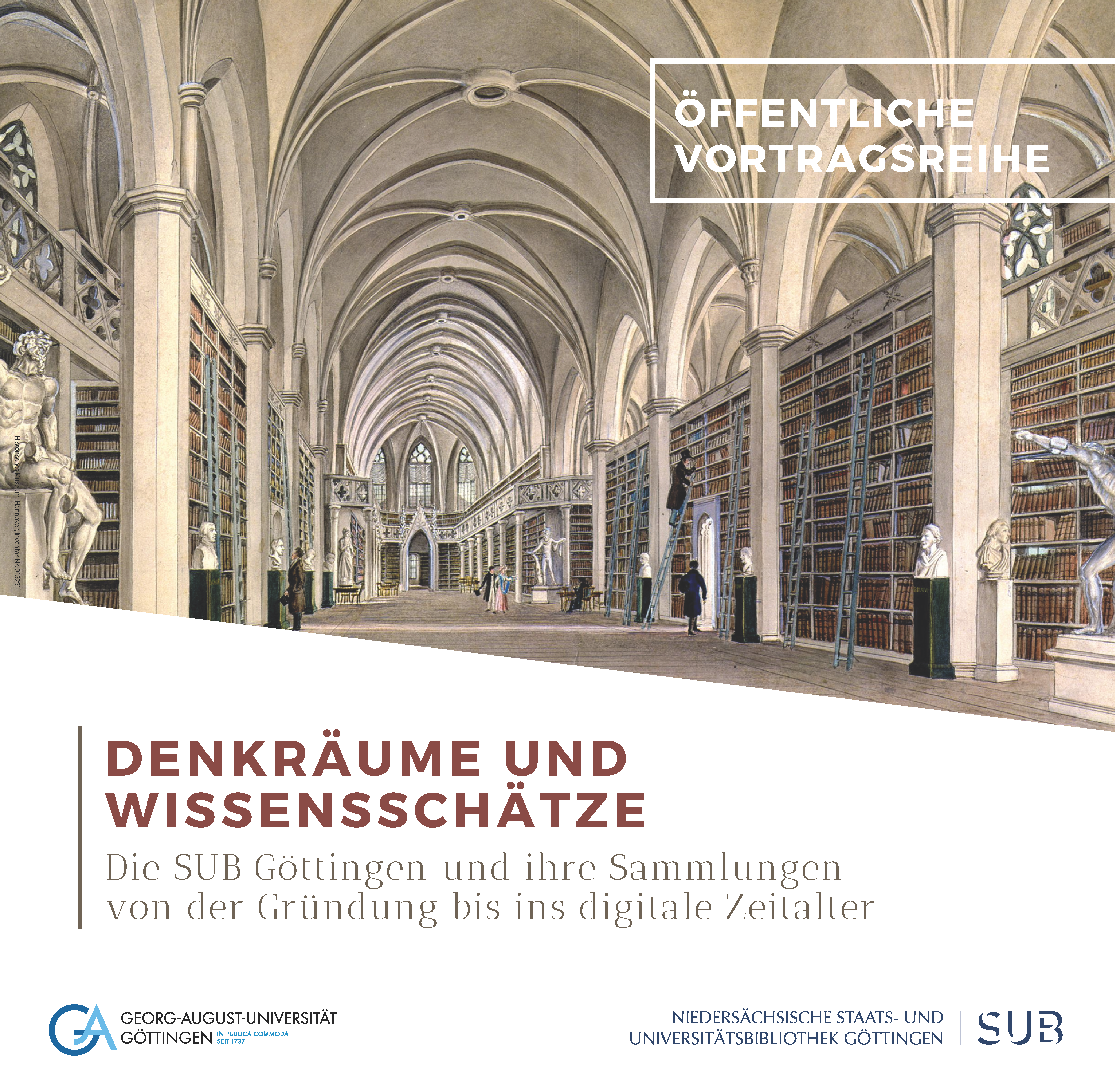
Panel Discussion on the Future of Libraries with Prof. Bela Gipp: July 17, 17:00
Join us for an engaging and insightful panel discussion on the modern evolution and future perspectives of libraries. Date and Time: July 17, 2024, starting at 17:00 Location: Paulinerkirche, Göttingen Welcoming Address: Prof. Dr. Metin Tolan, President of the University [...]
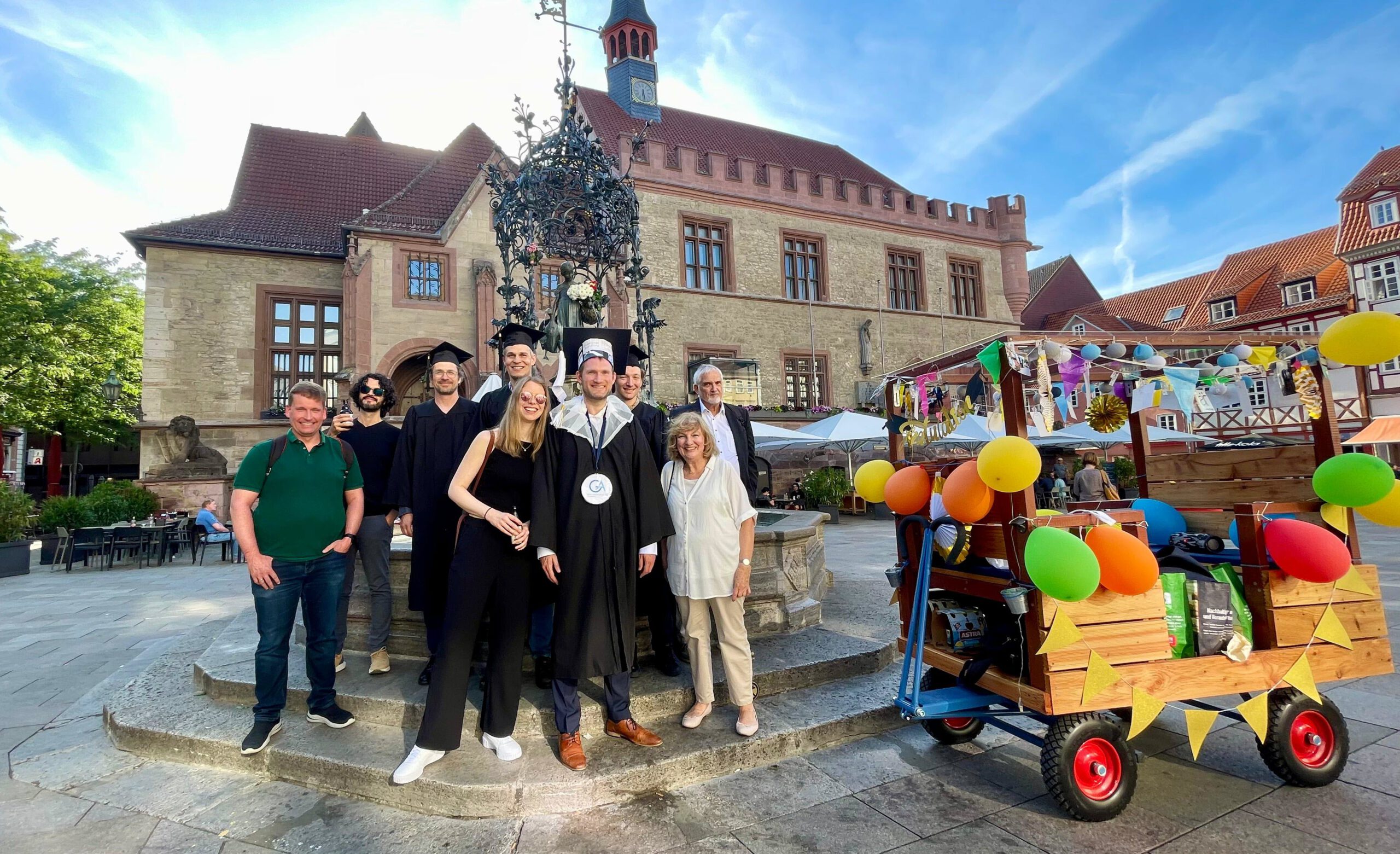
Hats off to Philipp Scharpf for sucessfully defending his PhD
The GippLab team is delighted to share the news that Philipp Scharpf has successfully defended his Ph.D. dissertation titled Mathematical Entity Linking: Methods and Applications. Philipp's research has opened new perspectives for the field of Mathematical Information Retrieval, rightfully earning [...]
